
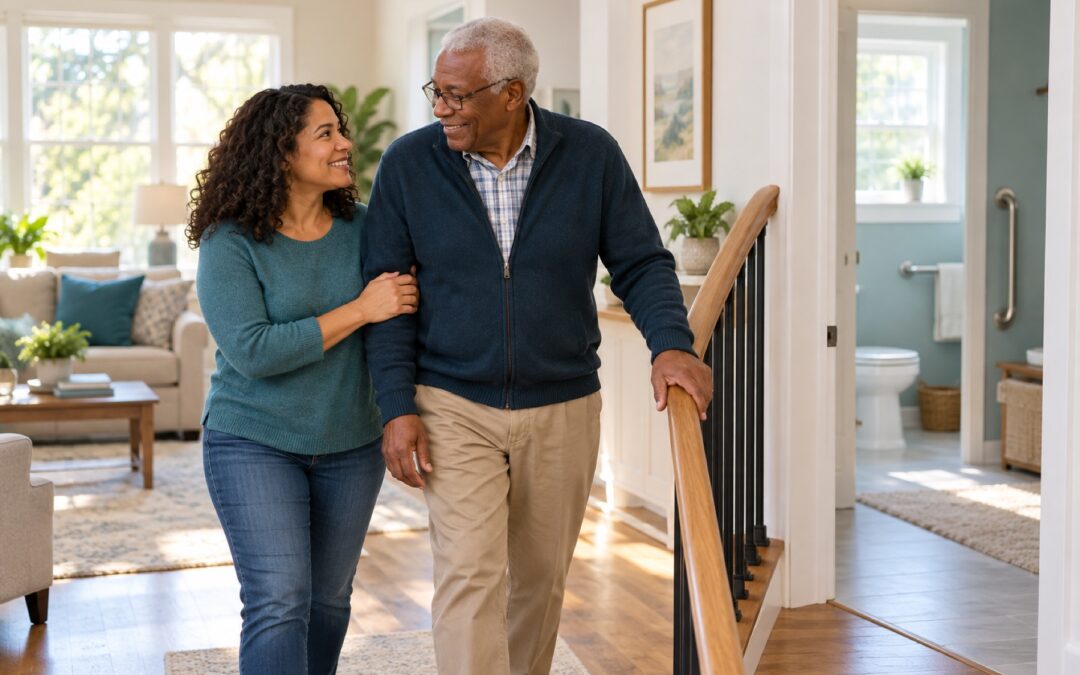
Most older adults want to remain independent, and many hope to stay in their own homes. A safer home does not need to look like a medical facility or require a complete renovation. Small, targeted changes can reduce hazards and make everyday routines easier.
Begin with the person who lives there. Ask what feels difficult, what they want to keep, and which changes they are willing to try. Home safety works best when it supports independence rather than feeling like something imposed.
Walk through the home together
Use the normal path from the entrance to the bedroom, bathroom, kitchen, and laundry area. Look for places where your parent steadies themselves on furniture, avoids a step, cannot reach an item, or struggles with lighting.
The National Institute on Aging recommends a room-by-room review and correcting immediate dangers such as loose railings and poor lighting first.
Ask whether there has been a fall, near fall, dizzy spell, or new fear of falling. Share those concerns with a health professional. Home changes are important, but vision, medication, strength, balance, footwear, and health conditions also affect risk.
Clear walking paths without erasing the home
Remove loose cords, unstable furniture, clutter, and small items from walking routes. Secure or remove throw rugs and repair uneven flooring. Keep frequently used objects within easy reach so stools and deep bending are less necessary.
Decluttering can be emotional. Possessions may carry memories, identity, or a sense of control. Start with safety zones rather than demanding a whole-house cleanup: the path to the bathroom, stairs, entrances, and the space beside the bed.
Ask permission before discarding anything. Use categories such as keep here, relocate, give away, and decide later.
Improve lighting and visibility
Add brighter, even lighting at entrances, hallways, stairs, bathrooms, and the route used at night. Replace burned-out bulbs and place switches where they are easy to reach. Nightlights or motion-activated lights can help, but test whether they create glare or confusing shadows.
Use contrast where helpful. A contrasting strip may make a step edge easier to see. Labels with large, clear print can support routines. Avoid busy patterns that make depth or objects harder to distinguish.
Focus on the bathroom
Bathrooms combine water, hard surfaces, transfers, and limited space. Consider professionally installed grab bars near the toilet and inside and outside the bathing area, nonslip surfaces, a stable shower chair, hand-held showerhead, and adequate lighting.
Do not rely on towel bars as grab bars. Ask an occupational therapist or qualified installer about safe placement and wall support.
The CDC recommends reducing trip hazards, improving lighting, installing bathroom grab bars, and placing handrails on both sides of staircases as part of fall prevention.
Make stairs and entrances easier
Repair loose steps and install secure handrails. Keep stairs clear and well lit at the top and bottom. Mark step edges when appropriate and avoid carrying items that block vision or prevent use of the rail.
At entrances, consider a sturdy seat for shoes, a shelf for packages, weather protection, and a clear path. Ramps and other modifications should be designed and installed correctly; seek professional guidance when slope, structure, or local codes are involved.
Simplify the kitchen and daily tasks
Move everyday dishes, food, and appliances between waist and shoulder height. Check that heavy items are not stored overhead. Use easy-grip utensils, clear labels, automatic shutoff devices, or meal support when appropriate.
Review food safety, smoke and carbon monoxide alarms, and the condition of electrical cords and appliances. If cooking has become unsafe, look for ways to preserve choice, such as prepared ingredients, supervised cooking, meal delivery, or a simpler appliance rather than removing all access without discussion.
Prepare for emergencies
Post the home address and emergency contacts where they can be found quickly. Keep pathways to exits clear. Ensure smoke and carbon monoxide alarms work and make an evacuation plan that reflects mobility, hearing, vision, oxygen, pets, and local hazards.
Consider a medical alert or check-in system when it matches the person’s preferences and abilities. Test it, identify who receives alerts, and make a backup plan for power or internet failure.
Bring in the right professional
An occupational therapist can evaluate how the person performs daily activities in the home and recommend individualized changes. A physical therapist may address strength, balance, walking, and safe use of mobility equipment. Contractors should be qualified for structural modifications.
Ask the health care provider about a fall-risk assessment after a fall, near fall, new unsteadiness, or medication change.
Prioritize changes by risk and effort
Families can become overwhelmed by a long list of recommendations. Sort changes into three groups: immediate hazards, simple improvements, and larger projects. A blocked exit, loose railing, or missing bathroom support deserves attention before decorative organization.
Make quick changes first, then price and schedule larger work. Ask whether local aging agencies, housing programs, veterans resources, nonprofits, or utility programs offer assessments or financial assistance. Verify eligibility and contractor credentials before agreeing to work.
Create a small maintenance calendar for smoke alarms, lighting, equipment, seasonal hazards, and emergency supplies. Safety features only help when they continue to function.
Review the home as needs change
A one-time safety project is not enough. Reassess after a hospitalization, new diagnosis, fall, mobility change, or change in vision or cognition. The NIA’s home safety checklist can guide repeat reviews.
Tum Coeur’s caregiving conversations often return to preparation because small decisions made early can preserve more choices later. Home safety follows the same principle.
Start with one high-risk route and one change your parent accepts. A clearer path, stronger light, secure handrail, or well-placed grab bar can make daily life safer without taking away the feeling of home.
WordPress tags: Home Safety for Seniors, Aging in Place, Fall Prevention, Aging Parents, Family Caregiving, Caregiver Checklist
Editorial note: This article provides general educational information and does not replace medical, legal, financial, or mental health advice. Please consult a qualified professional regarding your individual circumstances.